
Hybrid Solar Systems: The Best of Both Worlds in Renewable Energy
As the demand for reliable and sustainable energy continues to rise, solar technology has evolved to offer more flexible and efficient solutions. Among these innovations, hybrid solar systems stand out as a powerful option that combines the advantages of both on-grid and off-grid systems. By integrating solar panels with battery storage and grid connectivity, hybrid systems provide greater energy independence, reliability, and efficiency.
What Is a Hybrid Solar System?
A hybrid solar system is an advanced energy setup that combines solar power generation with battery storage and a connection to the utility grid. Unlike traditional on-grid systems, which lack storage, and off-grid systems, which operate independently, hybrid systems strike a balance by offering both backup power and grid support.
In simple terms, a hybrid system allows you to generate electricity from solar panels, store excess energy in batteries, and still remain connected to the grid for additional support when needed. This flexibility makes hybrid systems increasingly popular among homeowners and businesses seeking reliable and uninterrupted power.
How Does a Hybrid Solar System Work?
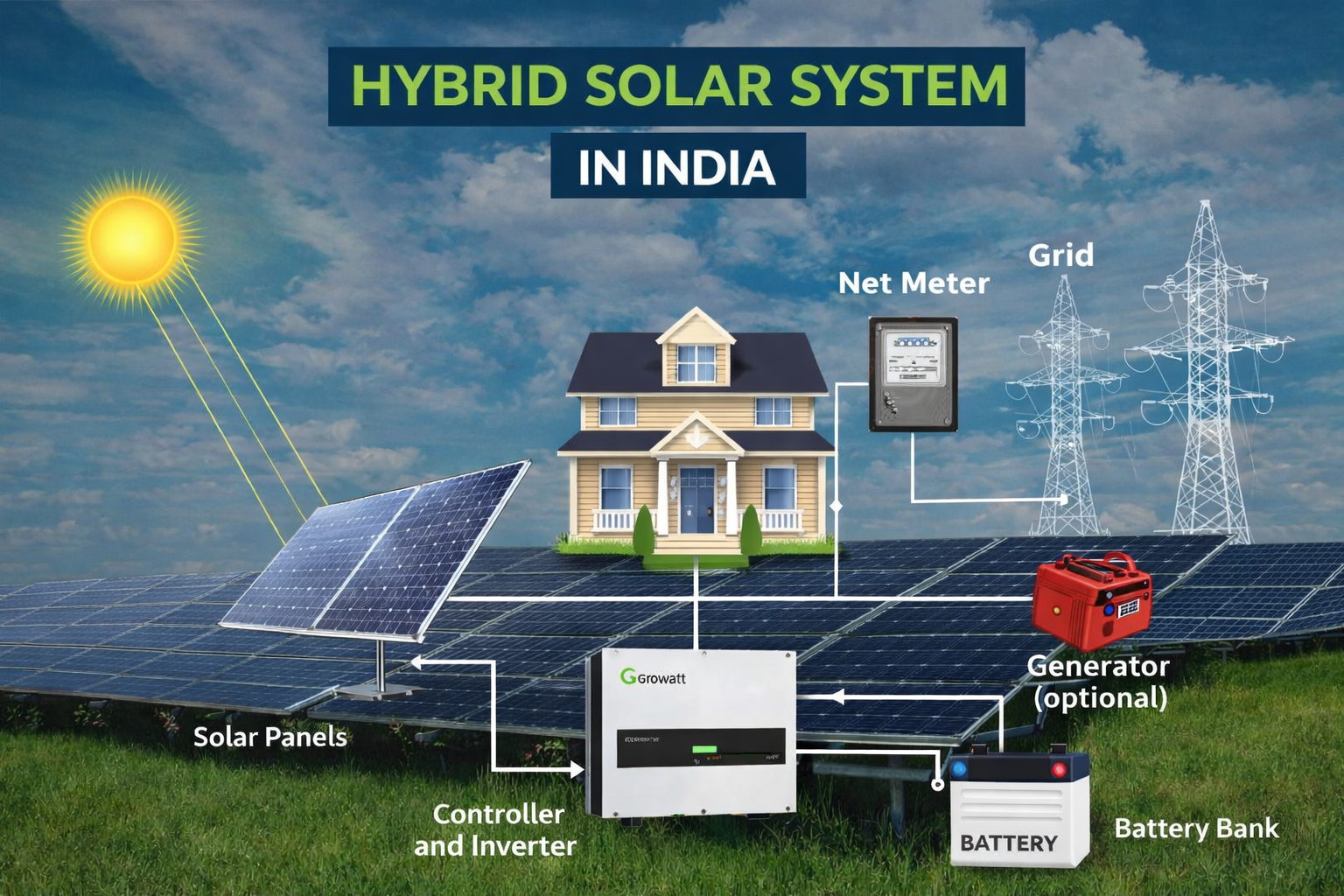
The working of a hybrid solar system involves multiple energy flows that are intelligently managed. During the day, solar panels generate electricity from sunlight. This energy is first used to power household appliances. Any surplus energy is then stored in batteries for later use.
If the batteries are fully charged, the excess electricity can be exported to the grid, depending on local regulations such as net metering. During nighttime or periods of low sunlight, the system draws power from the batteries. If the battery charge is insufficient, the grid acts as a backup source.
One of the key components enabling this seamless operation is the hybrid inverter. It manages the flow of electricity between solar panels, batteries, and the grid, ensuring optimal energy utilization.
Key Components of a Hybrid Solar System
1. Solar Panels:
These capture sunlight and convert it into electricity. Their efficiency and placement significantly impact system performance.
2. Hybrid Inverter:
Unlike standard inverters, hybrid inverters can handle both grid connection and battery storage. They are the brain of the system, directing energy flow based on demand and availability.
3. Battery Storage:
Batteries store excess solar energy for use during nighttime or power outages. Lithium-ion batteries are commonly used due to their high efficiency and long lifespan.
4. Charge Controller:
This component regulates voltage and current to protect batteries from overcharging and damage.
5. Utility Grid Connection:
The grid serves as an additional energy source and a destination for surplus electricity.
Advantages of Hybrid Solar Systems
Energy Independence with Backup Power:
One of the biggest advantages of hybrid systems is their ability to provide backup power during outages. Unlike on-grid systems, which shut down during power cuts, hybrid systems can continue supplying electricity using stored energy.
Optimized Energy Usage:
Hybrid systems intelligently manage energy flow, ensuring that solar power is used first, followed by battery storage, and then grid electricity. This maximizes efficiency and reduces reliance on external power sources.
Lower Electricity Bills:
By using stored solar energy during peak hours, users can significantly reduce their electricity costs. In regions with time-of-use tariffs, this can lead to substantial savings.
Flexibility and Scalability:
Hybrid systems can be customized and expanded based on energy needs. Users can start with a smaller setup and add more panels or batteries later.
Environmental Benefits:
By maximizing the use of renewable energy, hybrid systems help reduce carbon emissions and dependence on fossil fuels.
Challenges and Considerations
Despite their many benefits, hybrid solar systems come with certain challenges that should be carefully considered.
Higher Initial Cost:
Hybrid systems are more expensive than on-grid systems due to the inclusion of batteries and advanced inverters. However, the long-term savings and added reliability often justify the investment.
Complex Installation:
The integration of multiple components makes installation more complex, requiring skilled professionals for proper setup and maintenance.
Battery Lifespan and Cost:
Batteries are a critical component but have a limited lifespan. Replacing them can be costly, although advancements in technology are improving durability and reducing costs.
Regulatory Factors:
Policies related to grid connection, net metering, and energy export can influence the overall benefits of a hybrid system.
Who Should Consider a Hybrid Solar System?
Hybrid solar systems are ideal for individuals and businesses that experience frequent power outages or have high energy demands during peak hours. They are also suitable for those who want a balance between energy independence and grid reliability.
In regions where electricity supply is inconsistent, hybrid systems offer a dependable solution by ensuring continuous power availability. They are also a great option for users who plan to transition gradually toward complete energy independence.
Hybrid vs On-Grid vs Off-Grid
Understanding the differences between solar system types can help in making an informed decision:
- On-Grid Systems: Cost-effective and simple but lack backup power during outages.
- Off-Grid Systems: Fully independent but require significant investment in batteries and careful energy management.
- Hybrid Systems: Combine the strengths of both, offering backup power, grid support, and efficient energy use.
Hybrid systems provide a middle ground, making them one of the most versatile solar solutions available today.
The Future of Hybrid Solar Technology
The future of hybrid solar systems looks promising, driven by rapid advancements in battery technology, smart energy management, and renewable energy policies. As battery costs continue to decline and efficiency improves, hybrid systems are becoming more accessible to a wider audience.
In countries like India, where power demand is growing and grid reliability can vary, hybrid solar systems are gaining traction as a practical and sustainable solution. Government incentives and awareness campaigns are further encouraging adoption.
Additionally, the integration of smart home technologies and energy monitoring systems is enhancing the performance and convenience of hybrid setups. Users can now track energy production, consumption, and storage in real time, allowing for better control and optimization.